Loredano Rosin - Master of Glass

Sometime in the mid 1980s I was visiting a colleague in Mestre on the mainland opposite Venice. He took me to the workshop of the famous glass sculptor Loredano Rosin. After a long conversation with the artist who demonstrated his technique with sculptured, not blown, glass I acquired the two figures shown below.
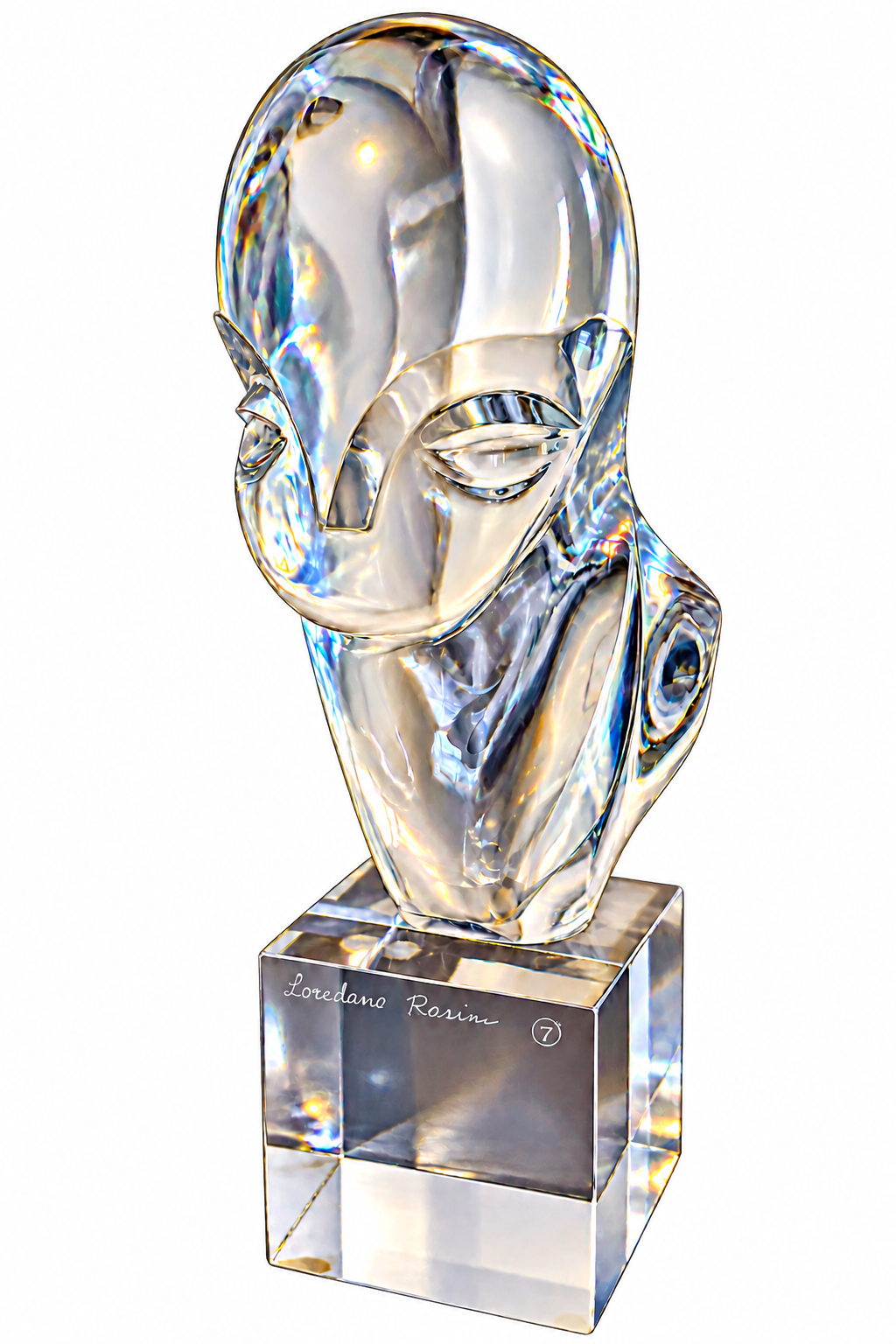
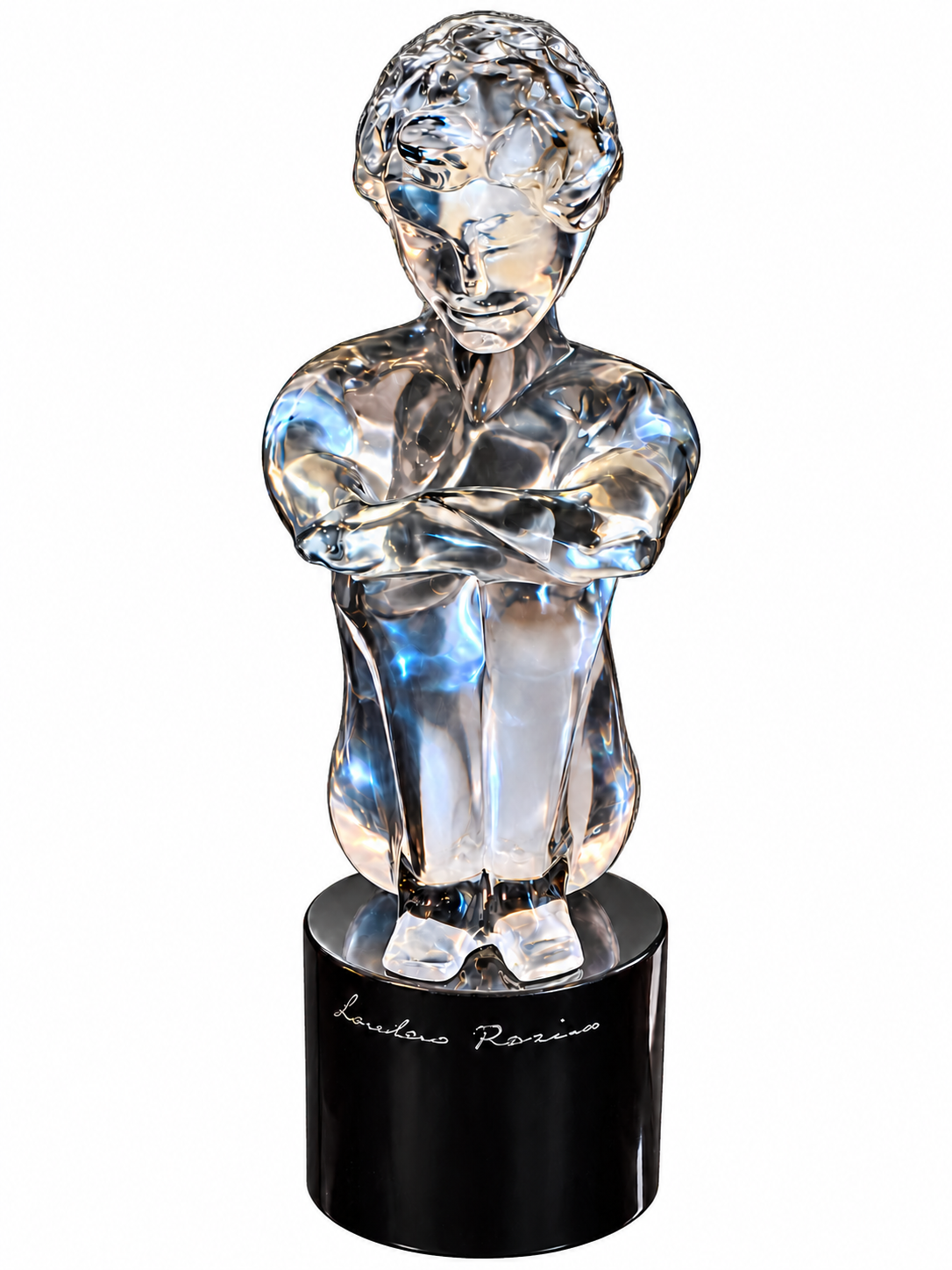
Click on either image to enlarge it
Rosin was born in Venice on January 10, 1936. His family moved to Murano when he was young; his father was a glassworker, and Loredano himself began working in a glass factory at about thirteen. He learned in the traditional Murano manner, through apprenticeship rather than an art academy, eventually becoming particularly interested not in conventional blown vessels but in sculpture made from solid masses of hot glass-vetro massiccio.
In 1965 he began collaborating with the Fucina degli Angeli, famous for translating designs by leading modern artists into glass. Rosin was one of the master glassworkers who solved the technical problems involved in translating the works of artists such as Pablo Picasso, Marc Chagall, Jean Cocteau, Max Ernst, Jean Arp and Lucio Fontana into glass.
Rosin was not simply executing somebody else’s cartoon. A painter could draw something that was seemingly impossible to make in molten glass. Rosin had to invent ways of turning the drawing into a three-dimensional object while respecting the peculiar behavior of glass. He later said that this experience forced him to devise new techniques rather than merely imitate earlier glass sculptors.
By the mid-1970s Rosin had established his own studio, working closely with his younger brother Dino Rosin, who became an accomplished glass artist himself. One of the Rosin brothers’ great achievements was their revival of calcedonio glass, a very old Murano technique whose formula had largely disappeared. Metallic compounds, Rosin used silver nitrate among them, produce unpredictable streaks of brown, blue, violet, green, and ochre within the glass giving it something of the appearance of agate or other semiprecious stone. Rosin often juxtaposed these richly streaked masses with completely transparent crystal glass. The Museo del Vetro in Murano credits Loredano and Dino with rediscovering a process whose secret had been considered lost for more than 150 years.
His reputation became increasingly international during the 1980s. In 1988 Rosin, his brother, and American glass artist William Morris taught at the Pilchuck Glass School in Washington State, in what Rosin’s studio describes as Pilchuck’s first course devoted to solid free-hand glass sculpture. The following year he gave a major demonstration at the Glass Art Society conference in Toronto.
Rosin died on November 11, 1991, from head injuries sustained in a water-scooter accident while returning home from Murano, reportedly after colliding with a mooring post. He was only 55. His brother Dino subsequently continued the family’s studio and much of the artistic and technical tradition the two men had developed together.
What makes Rosin especially interesting is that he sits at the intersection of two worlds: the centuries-old virtuoso craft tradition of Murano and the 20th-century idea of glass as a serious sculptural medium. His best pieces don’t look like decorative glass objects with sculpture added to them; the transparency, refraction, internal color and enormous physical mass of the glass are themselves the sculpture.
Comments
Loading