Victor Maurel
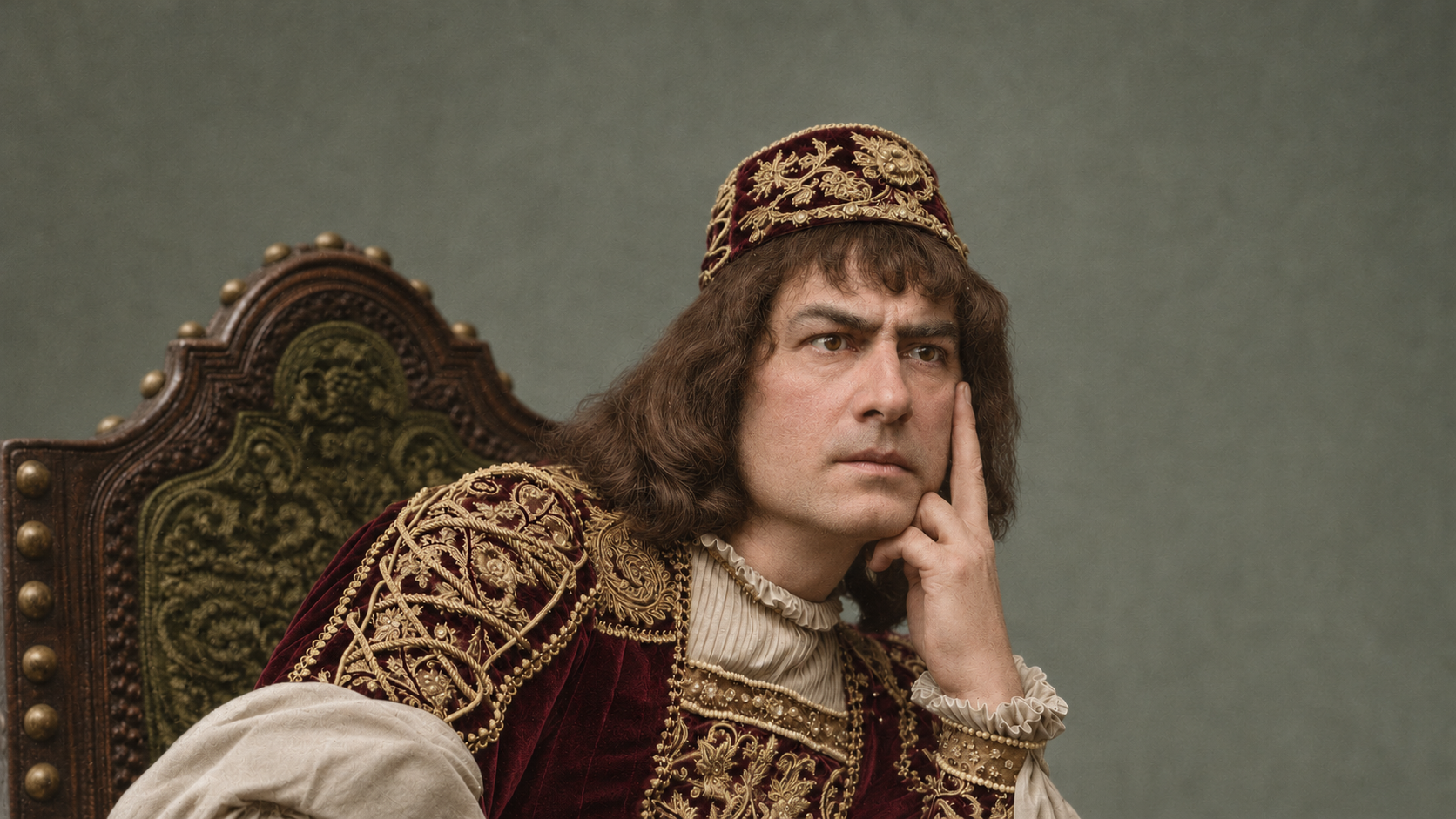
Victor Maurel was born Victor Salomon in Marseille on June 17, 1848. His mother, Fleurette Salomon, appears to have been of Jewish descent. According to a family history citing the 1833 death register of Blotzheim in Alsace, Fleurette’s mother, Anne Schwole, died in the town’s Jewish community house, and Rabbi Isaac Weil reported her death. Victor’s father, Auguste Bruno Antoine Maurel, was a Marseille architect. When his parents married on April 29, 1863, fourteen-year-old Victor took his father’s surname.
Maurel studied at the conservatory in his hometown and made his operatic debut at Marseille’s Grand Théâtre in Rossini’s Guillaume Tell. At the Paris Conservatory he studied with Eugène Vauthrot and Charles-François Duvernoy and won first prizes in singing and opera in 1867. The Paris Opéra engaged him, and he made his debut there the following year.
At twenty-five he sang Amonasro in the American premiere of Aida at New York’s Academy of Music. London audiences also knew him as a Wagnerian. At Covent Garden he sang Telramund in Lohengrin, Wolfram in Tannhäuser, and the title role in The Flying Dutchman.
Maurel was perhaps the finest Verdi baritone of his time. I say “perhaps” because his career overlapped those of Antonio Cotogni and Mattia Battistini. He combined exceptional breath control with an expressive, intelligent style. He took unusual pains over his characters and even wrote a book on staging Otello.
In 1880 Verdi saw Maurel at the Paris Opéra both as Amonasro and in the title role of Ambroise Thomas’s Hamlet. The following March, at La Scala, Maurel sang the Doge in the first performance of the revised Simon Boccanegra. Francesco Tamagno was Gabriele Adorno. In 1887 the two returned to La Scala for the premiere of Otello, with Tamagno in the title role and Maurel as Iago.
In 1892 Maurel sang Tonio in the first performance of Leoncavallo’s Pagliacci at Milan’s Teatro Dal Verme, with Arturo Toscanini conducting. The following year Verdi again turned to Maurel to play the fat knight in his last opera, Falstaff.
Maurel made his Metropolitan Opera debut as Iago on December 3, 1894, and sang Falstaff there at the opera’s American premiere on February 4, 1895. When the Met took Falstaff to Chicago the following month, the young Willa Cather saw what Maurel’s preparation had accomplished. She noticed the satisfaction with which Sir John stroked his belly as he explained Mistress Ford’s attraction to him. “His heart is as big as his stomach and his conceit as great as his heart,” she wrote.
That Verdi chose Maurel for the revised Doge and for the first Iago and Falstaff says all one needs to know about his gifts as a singing actor. In 1887, Verdi copied out the opening of Iago’s Credo from Otello and inscribed it to Maurel, “the incomparable Iago.” In its obituary of the singer, The Manchester Guardian judged that Maurel was to baritones what Feodor Chaliapin was to basses.
By 1907 Maurel and his second wife, the French playwright and screenwriter Fred de Gresac, were living in New York. He taught singing there and in 1919 designed the scenery for the Met’s production of Gounod’s Mireille. He died in New York on October 22, 1923, at seventy-five. His funeral Mass was celebrated at the Church of St. Vincent de Paul.
Verdi told his publisher, Giulio Ricordi, that he had never heard anyone sing words with Maurel’s clarity and expression. As Simon Boccanegra, Maurel had to bring a mob to its senses. As Iago, he had to talk Otello out of his. As Falstaff, he had a few bars to persuade us that Sir John had once been slim enough to slip through a ring. His recording of “Quand’ero paggio” still makes a good case.
Maurel sings “Era la notte” from Otello (1904) and “Quand’ero paggio” from Falstaff (1907). On the Falstaff record he sings the arietta three times, twice in Italian and finally in French. Both recordings were made well after his prime.
Comments
Loading