Adventures in Marketing
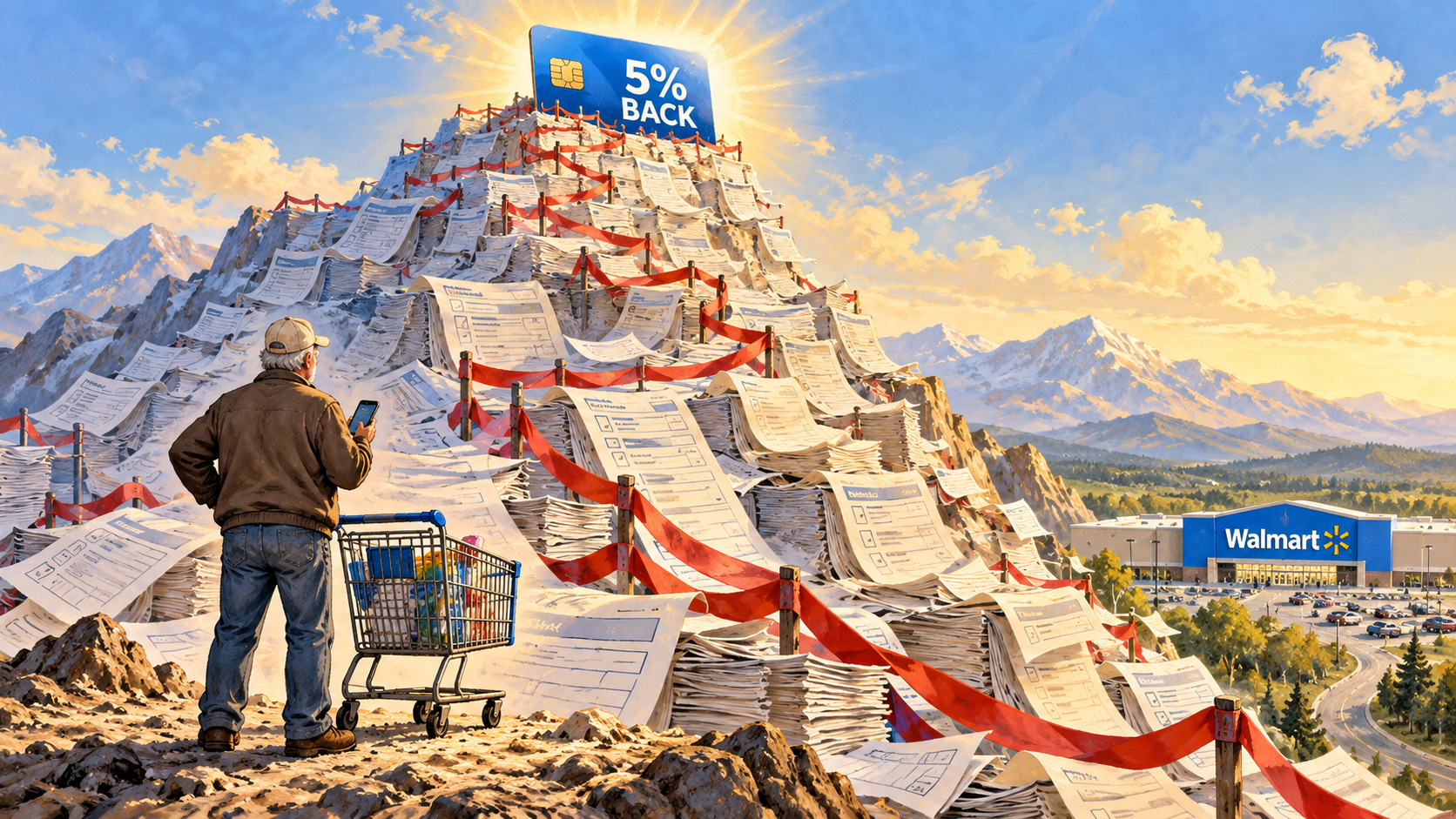
A few years back, I wrote an article arguing that Walmart’s future was dim because of its unsuccessful competition with Amazon. As so often happens here, I was wrong. The reason I was down on Walmart was that it couldn’t match Amazon’s speedy and reliable delivery system.
Given enough time, Walmart seems to have mastered dependable delivery of virtually everything it sells—which is almost everything. This mastery allowed an existing advantage over Amazon to emerge. Walmart has stores near much of the country’s population, giving it an extensive local network for delivering groceries, including fresh and frozen foods. Amazon delivers these things too, but Walmart’s stores provide a considerable advantage. For a reasonable yearly fee, Walmart+ provides delivery without an additional delivery charge on qualifying orders. You can even choose between two streaming services—Paramount+ and Peacock—with ads included and an ad-free upgrade available for an additional fee.
Walmart even offers a credit card that gives you 5% back on eligible Walmart purchases if you have a linked Walmart+ membership. Sounds great. What could go wrong? American businesses have always been innovative, but that quality often has a downside. There are always new ways to screw up. And Walmart and its credit card partners have found a whopper.
More than a month ago, I decided to get the card. I finally got approved yesterday. Walmart’s 5% cash-back offer resembles Amazon’s. I have the Amazon card. It took me five minutes to get approved for it. How did Walmart manage to make a customer wait more than a month for approval while forcing him through more gyrations and contortions than a circus acrobat or rubber man? Here’s how it happened.
On June 9, 2025, OnePay and Synchrony Bank announced a forthcoming credit card program with Walmart, scheduled to launch that fall. The program brings together OnePay, a financial technology company backed by Walmart, Synchrony Bank, the card issuer, and Mastercard, the payment network.
I got an email inviting me to see whether I was preapproved. I provided the usual information and was told that I was. So I finished the application and then was told there was an unspecified problem. Whichever machine I was dealing with told me to try the OnePay app. I did and was told that I had a credit score over 800 and that everything was copacetic, except that I couldn’t get a card.
By this time, I had spent a lot of time fooling around with OnePay, so I filed a complaint with the Better Business Bureau. Doing so may not solve a problem you’re having with a musclebound corporation, but it can get a response. Sure enough, I got a call the next day from Leslie—not the person’s real name—who explained that I had typed an incorrect number into one of the login screens and that I should reapply in a month.
Neither the explanation nor the instruction made sense to me. Everyone makes a typo during an application process; why should correcting one require a month’s wait? But I was tired of dealing with OnePay, so I forgot about the card and moved on to other nonproductive activities.
After a month had passed, I remembered the card and reapplied—my pain tolerance is high. Again, I was refused, but this time the refusal included a telephone number to call for an explanation. I called and spent half an hour on hold before reaching an operator.
It took considerable repetition to establish what I was supposed to do. She would send a link to my mobile phone through which I was to record a video of my face moving back and forth as if signaling no, then photograph the front and back of my driver’s license. Thirty minutes of failed attempts at videography and photography finally produced an acceptable result. My reward was a 20-character code and another telephone number to call.
Verifying my identity was reasonable; making me spend a month discovering how to do it was not. The operator said all this complexity was to fight fraud. Well I’m sure it does, but it also fights legitimate bussines.
Several exchanges and repeated recitations of my Social Security number later, another operator told me that the card would arrive in a week. She also said it was already set up for use in the places where I intended to use it—mainly Walmart. That turned out not to be accurate. I still had to add it as a payment method to my Walmart account, the app, Google, and several other sites.
The account came with a credit limit low enough to create yet another inconvenience: making several substantial purchases could require paying down the balance during the billing cycle to free up available credit. But that’s for another day.
I wonder how many seniors who aren’t comfortable with computers would or could go through all this. Walmart is not acting in a customer-friendly fashion, nor is Synchrony, its card issuer—“Engulf and Devour” would suit it better. You would think that any business intent on making a sale would make things easier for its customers, rather than place Mount Everest between them and a purchase.
Caveat venditor!
Comments
Loading