

I’ve been writing a lot about great baritones of the past century, while I’ve mentioned him a few times, this is the first post devoted exclusively to Tito Gobbi (1913-1984).
A major figure of 20th-century opera, Gobbi combined vocal distinction with an acting ability rarely equaled among singers of any vocal category. His career, which spanned the late 1930s through the 1960s, included numerous recordings that, along with his stagecraft, have ensured his reputation endures.
Born in Bassano del Grappa in 1913, Gobbi did not initially train as a singer; he studied law at the University of Padua before turning to music. He enrolled at the Accademia di Santa Cecilia in Rome, where he studied with Giulio Crimi. He made his stage debut in 1935 in Gubbio as Count Rodolfo in Bellini’s La sonnambula, and within a few years, he had established himself in Italian houses, including La Scala, where he first appeared in 1942.
From the outset, Gobbi’s artistry was marked less by sheer vocal opulence than by a penetrating intelligence. His baritone was not conventionally “beautiful” in the plush, velvety sense associated with singers like Ettore Bastianini; instead, it was a highly malleable instrument capable of a wide range of color and inflection. What distinguished him was his ability to inhabit a role completely – through diction, phrasing, and physical gesture, creating fully realized dramatic portraits.
This quality made him an ideal interpreter of the great Verdi and Puccini roles. His Rigoletto was a landmark portrayal, notable for its tragic inwardness and sharply etched characterization. In Tosca, his Baron Scarpia became perhaps the definitive modern interpretation: urbane, sadistic, and chillingly controlled. His association with Maria Callas – particularly in the famous 1953 and 1964 recordings of Tosca – produced performances of extraordinary dramatic intensity, with Gobbi’s Scarpia providing a perfect foil to Callas’s volatile heroine.
Gobbi’s repertoire focused on Verdi and Puccini. He was an outstanding Falstaff, capturing both the comedy and pathos of Shakespeare’s knight, and a compelling Simon Boccanegra, where his gift for portraying inner conflict found ideal expression. In Mozart, he brought unusual dramatic specificity to roles such as Don Giovanni, emphasizing the character’s aristocratic menace rather than mere charm.
International recognition followed the Second World War. Gobbi became a regular presence at the Royal Opera House, where he was particularly admired for his acting, and he appeared sporadically at the Metropolitan Opera. However, his greatest triumphs were in Europe. His collaborations with conductors such as Victor de Sabata and Herbert von Karajan yielded recordings that remain benchmarks.
Gobbi’s recorded legacy is central to any assessment of his career. The 1953 EMI recording of Tosca under de Sabata alongside Callas and Di Stefano is often cited as one of the greatest opera recordings ever made, with Gobbi’s Scarpia a masterclass in vocal acting. Equally notable are his recordings of Rigoletto, Falstaff, and Otello (as Iago), in which he demonstrates an unmatched ability to color the voice to reflect shifting emotional states. His Iago, in particular, avoids caricature, presenting instead a chillingly rational embodiment of evil. And, as you’ll hear below, he doesn’t laugh at the end of the Credo. The laughter typically heard is an invention of baritones and is at odds with Verdi’s instructions that, after the final words, he shrugs his shoulders, turns away, and moves upstage.
In later years, Gobbi turned increasingly to stage direction, bringing the same dramatic insight to his productions that had characterized his singing. He also wrote an autobiography, My Life, which offers valuable insight into his artistic philosophy – especially his conviction that opera is, above all, a form of theater.
If Gobbi had a limitation, it lay in the relative lack of sheer tonal luxury compared with some contemporaries. Yet this was ultimately secondary to his interpretive gifts. He was not merely a singer of roles but a creator of characters, and his performances often give the impression of spoken drama heightened by music rather than singing adorned by acting.
Today, Tito Gobbi stands as one of the supreme singing actors of the recorded era. His legacy resides not only in the notes he sang but in the meanings he uncovered within them – meanings preserved in recordings that continue to define how these roles are understood and performed.
Below are examples of his singing that show both his dramatic excellence and the unique sound that characterized his singing.
I’ll start with the role that was as close to him as a tattoo – Baron Scarpia, the fiendish embodiment of evil in Puccini’s Tosca. He made his Met debut in that role. I was at that performance (January 13, 1956). Zinka Milanov was Tosca, and Giuseppe Di Stefano was Cavaradossi. It was the only time I heard Gobbi in performance. He was darkness personified. The excerpt below is the conclusion of Act 1. It’s the part where Scarpia claims that Tosca makes him forget God – as if he had any relationship with the deity.
Next two Rossini arias. Largo al factotum (from The Barber) needs no further details. Everyone knows it.
Resta immobile (in the Italian version of William Tell) occurs just before Tell shoots the apple off his son’s head. In it he tells him to be still and confident in his father’s skill at archery.
Another Puccini gem – Nulla silenzio comes near the end of Il Tabarro. Michele knows his wife has a lover, but lacks his identity. In it, he tries to deduce who it might be. Events just after the aria reveal that it’s Luigi, a young stevadore.
Next, a few Verismo standards. Nemico dell Patria is in Act 3 of Giordano’s Andrea Chenier. Carlo Gerard muses on how the French Revolution went wrong.
The Prologue to Leoncavallo’s Pagliacci is the reason leading baritones sing the role of Tonio, who doesn’t have much to do after the famous introduction to the opera.
The same composer’s Zazà is rarely done. Its baritone aria Zazà, piccola zingara is often done as a recital piece. It’s a fine number.
Gobbi often appeared in the title role of Don Giovanni. Leporello, posing as Don Giovanni (Act 2), leads Elvira away to keep her occupied while Don Giovanni serenades her maid with his mandolin. Deh, vieni alla finestra – (Ah, come to the window).
Despite Gobbi’s identification with Baron Scarpia, he was really a Verdi specialist – to the extent that a singer with such a vast repertoire could be said to specialize in anything.
Pieta, rispetto, amore is sung by Macbeth just before he is killed by Macduff. It’s another example of Verdi having his villains sing like angels. The melody is so beautiful that one can’t help feeling pity for the benighted Macbeth.
Eri tu is sung by Renato, who is convinced he has been betrayed by his best friend Riccardo; he thinks the tenor has seduced his wife. The recitative is better than most arias. This piece is one of Verdi’s great creations.
Verdi’s Rigoletto is the baritone’s summa. The deformed jester’s two arias are below. First Pari siamo, then Cortigiani, a scene of such dramatic impact that it stands at the summit of Italian opera. Gobbi’s acting skills were so nuanced that his Rigoletto was one of the best of the last century.
Gobbi was a renowned Falstaff. Here is the Honor Monologue that conludes the opera’s first scene.
Finally, opera’s acme of villainy – Iago. In performance, Gobbi, at the conclusion of the Credo, followed Verdi’s instructions exactly.
Tito Gobbi was the embodiment of the singing actor. He is to baritones what Maria Callas was to sopranos.


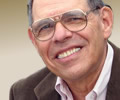


Tito Gobbi was awarded the prestigious Commendatore al Merito della Repubblica, an honor very few singers have garnered. Among the other great singers who considered him one of the greatest singing actors were Alexander Kipnis, Renata Tebaldi, Zinka Milanov, and two Americans who were also Commendatore recipients, Richard Tucker and Rosa Ponselle. Her praise of Gobbi was especially significant because she had sung with (and recorded with) the superstar baritone Riccardo Stracciari.